
First Impressions
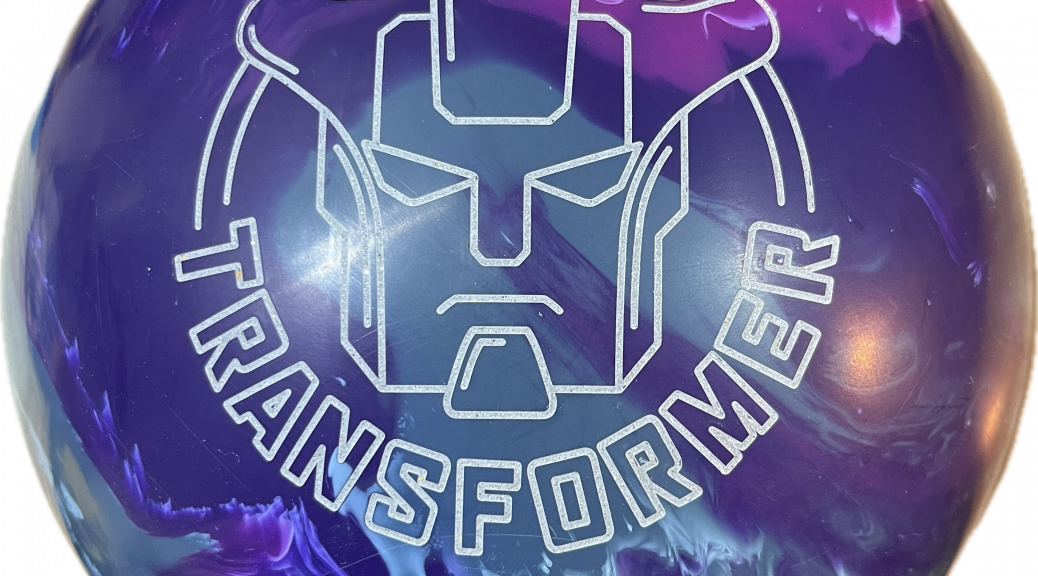
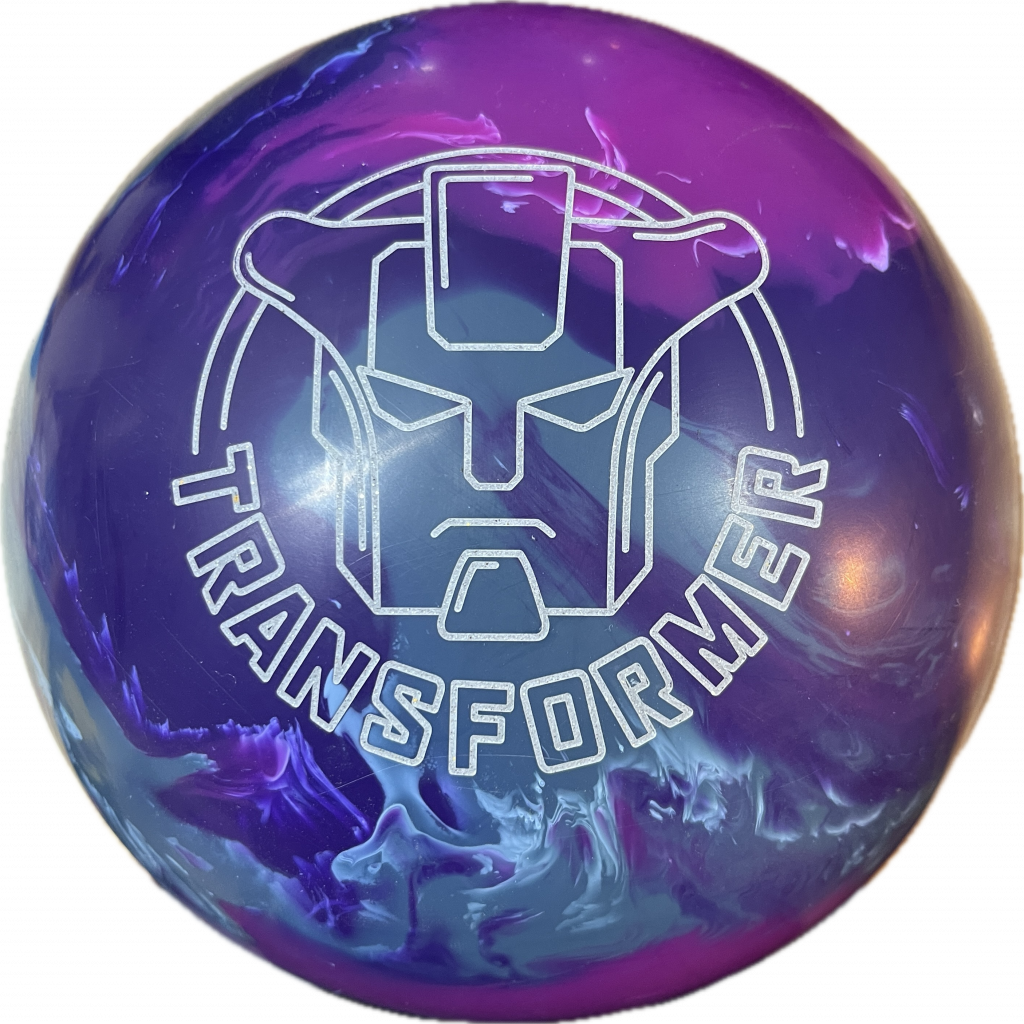
The new Roto Grip Transformer reminds me a lot of the 900 Global Reality and that’s a really good thing!
if you like what we do, please click that subscribe and notification button, check us out on socials and patreon
Tamer Elbaga (Lefty)
Style: Tweener
RPM: 365 rpm
PAP: 5 1/8 & 3/8 up
Average Speed: 18.5 mph (at release)
Axis tilt: low
Axis rotation: medium/high
Test Equipment: 14 Pounds
Layout: 50 x 4.5 x 45
Tyler Church (Righty)
Style: Power Player
RPM: 425 rpm
PAP: 5 1/2 & 1/2 up
Average Speed: 19 mph (at release)
Axis tilt: low
Axis rotation: medium
Test Equipment: 14 Pounds
Layout: 50 x 5.25 x 50
Bryan Hoffman (Righty)
Style: Stroker
RPM: 280 rpm
PAP: 4 1/2 & 1 1/2 up
Average Speed: 18.5 mph (at release)
Axis tilt: high
Axis rotation: medium
Test Equipment: 14 Pounds
Layout: 55 x 4.75 x 45
“Keep in mind that coverstock accounts for 70% of ball reaction, but the core creates the dynamic shape of the reaction. Your driller will alter the shape to suit your game.”
Pattern
THS: 44ft, 25.8ml, 12:1 ratio
Sport: TBD
Specs
The Roto Grip Transformer uses the new Morph-Wing asymmetric core inside the new V-R1 Solid Reactive coverstock.
15 pound = RG of 2.51, diff of .051, mb of .015
14 pound = RG of 2.53, diff of .053, mb of .013
Coverstock finish: 4000 abralon
Power Player’s Perspective
Ok first off, I’m jealous Tyler and Bryan got to test this while I’m sidelined from the hip replacement. They made the ball look really good. I’m going to get into the ball motion first and come back with some technical info that I think is worthwhile so stay tuned. On a basic level, we have a medium/low RG core, mid/high RG and a mid/strong mass bias called the Morph-Wing inside a non-nano mid/strong cover called the V-R1. It all sounds very in between but it really works out quite well. You essentially have a nice strong core motion but a cover that doesn’t have so much bite that it turns into a very rolly piece. So it does feel like it has the mid-lane rolly characteristic but not super early. It also has the climbing rounded strong arc downlane that feels continuous and not super forward. It’s sort of like a goldilocks. First thing I thought of just watching it roll was the 900 Global Reality. Tyler saw all of this motion I described and struck a lot. Very easy to read the lane and besides a couple of flat 10 pins, the Transformer really just seemed like a goldilocks. Felt like a big ball that can be used on much more than just heavy oil. Now I will say that the V-R1 cover isn’t super strong so I think it’s the perfect matchup with this core. Plus Roto Grip was I think very smart in putting it to 4000 grit so the ball doesn’t feel super round. You can put surface and make this ball roll even earlier. The other thing we saw for Tyler was that it wasn’t very far from his Absolute Power. Perhaps the biggest issue with that one was the cover was on the weaker side and lane shined quickly turning it into a condition specific piece. So hopefully the Transformer cover doesn’t get too weak with laneshine.
Stroker’s Stance
I want to say Bryan had an above average look with the Transformer. With the 4000 grit finish, it wasn’t super early or feel like it was draining it’s energy but still felt like it was reading the lane. It also seemed to store good energy for decent punch downlane. And even the shots that arced a little more evenly just seemed to carry quite well so the angle it created and energy retention just seemed to work quite well. It didn’t trap Bryan into a single line. He can play 2nd arrow but was also able to edge in several boards. He didn’t lose motion until he reached the 3rd arrow. So with no condition change, it’s the kind of ball that he could tweak the look and still be within the window of the ball.
I want to say this is a strong defined ball like the Reality was but at 4000 it may be almost Strong Defined minus or even Strong Control with the shape being so predictable. The cover is also not as strong overall, more in the X-Cell range so not as strong as the nano type covers.
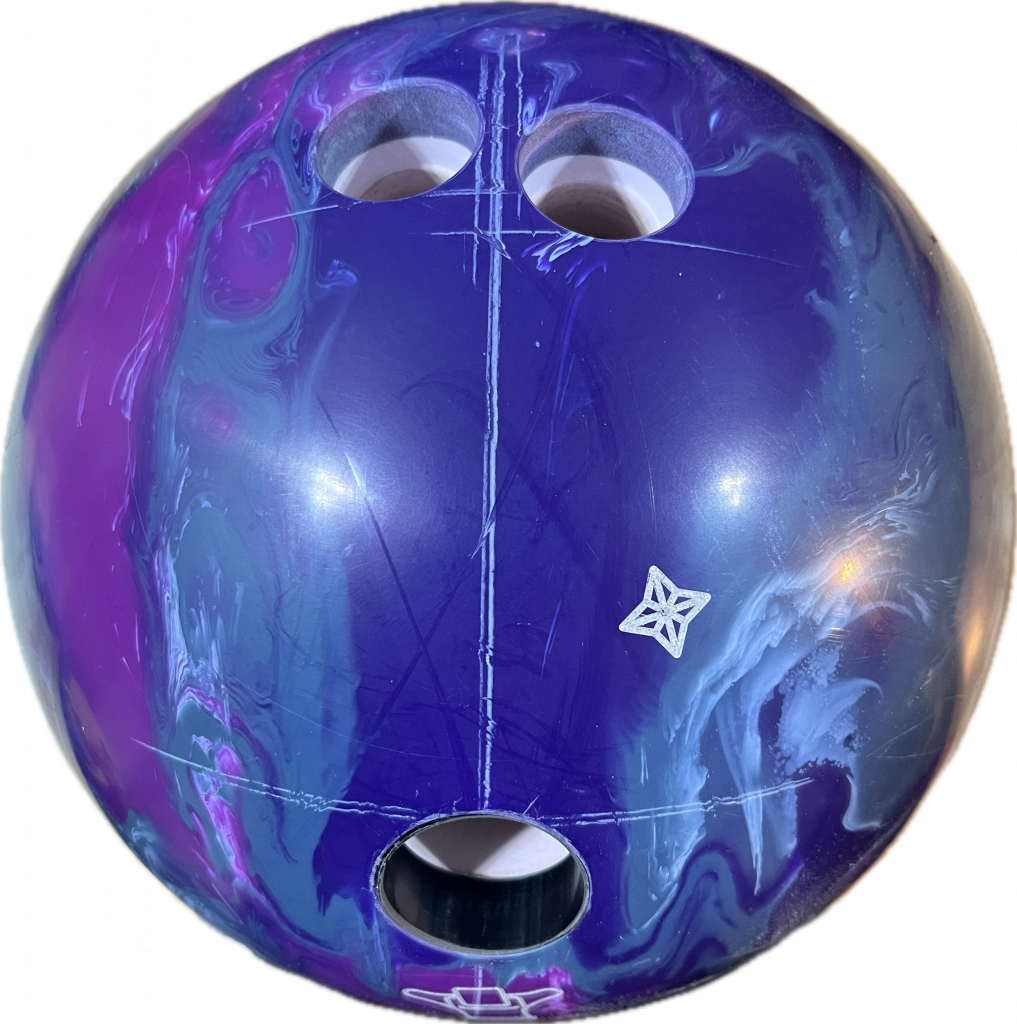
There are a couple of technical points I want to highlight. I don’t usually talk to much about this but there was a fascinating bit of info on the core. It has these wings, I’ll flash up the pic. So if you drill a pin up, you basically miss hitting the core and keep it’s on paper integrity a bit more. However, if you punch the thumb in that box Schlem shows there 4″ below the pin, you punch one of the wings, thereby lowering the RG. This is what we decided to do for our testing and I have to say both testers really liked the motion. That said, we can vouch for using that area to lower the RG which just gave us enough of a balance between core read and cover strength to articulate the midlane characteristics quite well. Wherever you decide to slot this ball in the bag, I think you’ll be happy.
Thanks for watching.